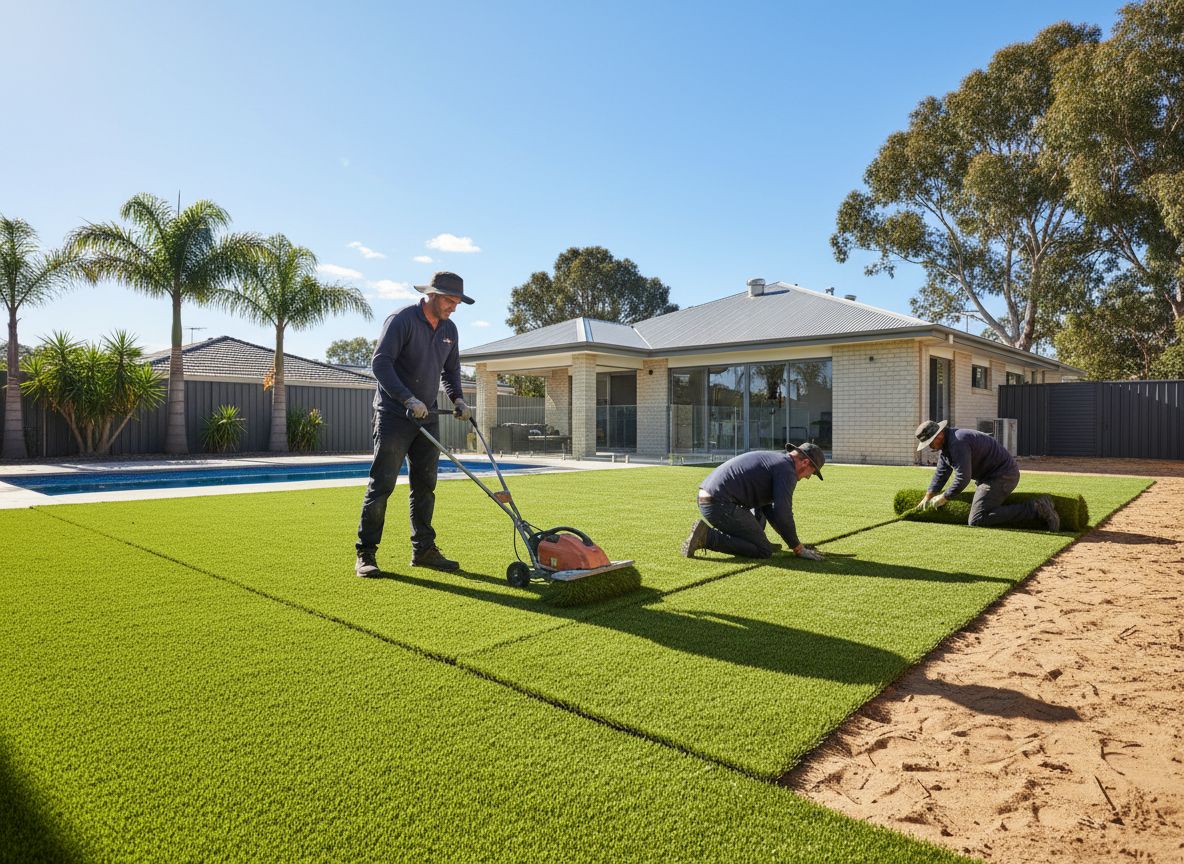
Who artificial grass suits in Perth
Synthetic turf suits yards where a living lawn struggles: deep shade beside the house, strips worn bare by dogs or children, corners the sprinklers never reach, or households that simply want no mowing or watering. Laid well, it stays green and tidy with a rinse and a brush now and then.
Spotting the patch where lawn keeps failing
Look for bare sand that returns every summer, moss or thin blades under trees and eaves, muddy tracks along a dog run, or turf you have resown more than once. If one area keeps letting you down while the rest of the garden copes, that is often the spot worth converting.
Why the base and drainage decide how long turf lasts
Most problems with synthetic grass start underneath. Loose sand shifts, so the old surface is dug out and replaced with a compacted crushed base laid to a gentle fall away from the house. Water drains through the perforated backing, so a firm, even base stops puddles, dips and wrinkles forming later.
Heat, pets and the artificial or real turf decision
Synthetic grass can get hot in full afternoon sun, so it tends to suit shaded or part shaded areas best. A quick hose down cools it for play. If the spot gets sun all day and you are happy to water, real turf may be the better fit; for pets, ask how urine drains and rinses away.
Questions to ask about the turf and the quote
Ask about pile height, backing, infill and how the product feels in sun. Check the quote names the removal of old lawn, base material and depth, edging, weed membrane, how joins are made and hidden, and disposal. Get any warranty terms in writing, for both the product and the laying work.
Next step for your artificial grass area
Pace out the area in square metres, estimate how many hours of sun it gets, and check what sits underneath now: lawn, bare sand, pavers or concrete. Then request a quote here and a licensed and insured local contractor can follow up.
Artificial Grass Services We Offer
✓Shaded Side Yard and Courtyard Turf
For narrow or shaded spaces where real grass thins out, with attention to drainage near walls and downpipes.
✓Pet and Play Area Turf
For runs and play spaces that wear bare, with a free draining base so the surface can be rinsed clean.
✓Turf Over Existing Concrete or Pavers
Laid onto a hard surface already in place, where the fall and drainage path for rainwater need checking first.
How it works
- 1
Check the area
Measure the space, note sun and shade through the day, and find what sits underneath, including old lawn, sand, roots or slab.
- 2
Compare turf and base options
Look at product samples, pile height and infill, and agree how deep the base goes and where water will drain.
- 3
Prepare the ground
Old surface is removed, edging set, and crushed base spread and compacted to an even fall away from the house.
- 4
Lay and finish
Turf is rolled out, joined, pinned and trimmed to the edges, then infill is brushed in and the site cleaned up.